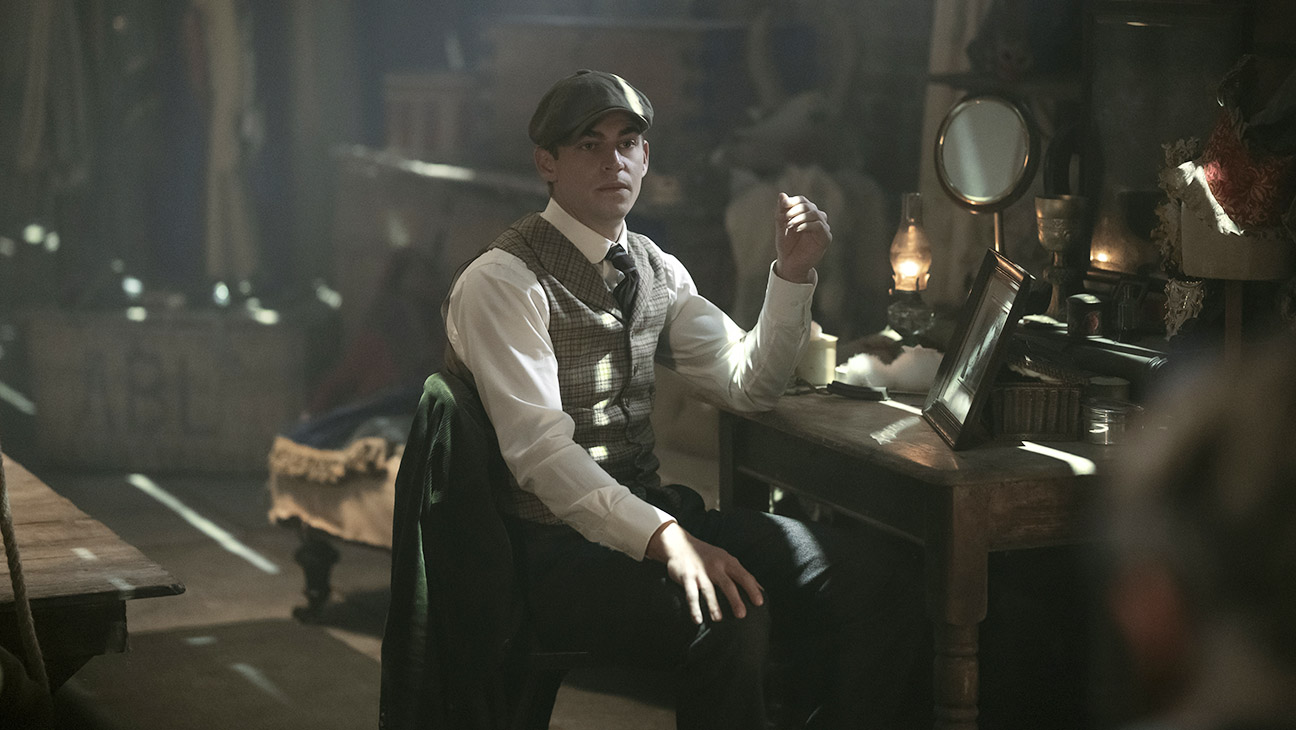
Guy Ritchie's Young Sherlock: Is His Signature Style Still Fresh?
Guy Ritchie, a director synonymous with a distinct brand of British gangster chic and kinetic action, has once again turned his lens to the enigmatic world of Sherlock Holmes. This time, however, he's rewinding the clock to explore the detective's formative years in the new TV series, Young Sherlock. The pressing question on many fans' minds, and the central focus of this young sherlock review, is whether Ritchie's highly recognizable directorial flair still feels innovative or if it's beginning to show its age.
Known for his fast-paced narratives, stylized violence, quirky characters, and a relentless visual energy, Ritchie's previous excursions into the Sherlock Holmes universe with Robert Downey Jr. and Jude Law were both box office successes, cementing a specific aesthetic for the consulting detective. Now, with a new cast and a younger Holmes, the challenge is to reinvigorate this established formula. Does Young Sherlock deliver a refreshing take, or does it echo a familiar tune that has lost some of its rhythm?
The Undeniable Ritchie Blueprint: A Familiar Visual and Narrative Language
From the moment Young Sherlock kicks off, viewers are immediately plunged into a world that is unmistakably Guy Ritchie's. The series is an eight-part mystery-drama that unabashedly leans into the director's established playbook. Expect to see:
- Kinetic Action Sequences: Flippant young men, perhaps in flat caps, hurtling through the air in slow motion before exploding into a flurry of quick cuts. Ritchie's signature blend of choreographed chaos and visual spectacle is front and center.
- Bare-Knuckle Brawls and British Grit: Gritty street fights, often cheered on by a chorus of "bulbous cockneys," are a staple. The series embraces a certain rough-and-tumble charm, often underscored by frantic Irish folk music, adding a distinct atmospheric layer to the mayhem.
- Hyperactive Editing and Visual Flair: Scenes abruptly shift from normal speed to hyper-fast, sometimes "for no reason" other than to maintain a high-octane pace. This is complemented by Ritchie's use of visual exposition, text overlays, and dynamic camera work that keeps the audience constantly engaged, if not slightly breathless.
- Effortful Banter and Quirky Dialogues: The characters, often bruisers in tweed trousers, engage in witty, rapid-fire exchanges. There's a particular joy in Ritchie's knack for creating memorable, if sometimes forced, repartee, often peppered with specific British slang and colloquialisms.
- Inept Authority Figures: Expect to encounter blundering "rozzers" (police officers) who provide comic relief and serve as a foil to the quick-witted protagonists, allowing Holmes's brilliance to shine all the brighter.
- Sidelined Female Characters: A recurring criticism of Ritchie's work is the portrayal of female characters. While they contribute to the plot, they often feel excluded from the core "fun" or agency, remaining largely functional rather than fully fleshed out. This trend, unfortunately, seems to continue in Young Sherlock, raising questions about modern storytelling in period settings.
Indeed, one could exclaim, "Strike a light an’ cor blimey, guv’nor, you’ve got this Guy Ritchie geezer bang to rights!" The familiarity of these elements can be both its greatest strength and its most significant weakness, a point central to any comprehensive young sherlock review.
Oxford's Enigmas: Plotting a Young Detective's First Steps
The stage for this origin story is set in the hallowed, yet surprisingly tumultuous, halls of Oxford. Holmes Jr. (Hero Fiennes Tiffin), a smirking young pickpocket, finds himself at "arguably the greatest university in the world!" not by choice, but by obligation. His sensible older brother, Mycroft (Max Irons), has forced him to earn his keep as a porter, issuing a stern warning: "I will be keeping an eye on you." But Mycroft's vigilance isn't enough to prevent the "enormously eyebrowed recidivist" from stumbling into his very first case.
What unfolds is a sprawling, almost Tintinesque affair that quickly spirals beyond campus grounds. The narrative weaves together a complex tapestry of deadly weaponry, ancient manuscripts, international espionage, and long-buried family secrets that threaten to rock the British establishment to its very brogues. At the heart of the initial tomfoolery is the introduction of a magnificently assured Dónal Finn as the young James Moriarty, who quickly becomes Holmes's "irascible new BFF." Their dynamic, a playful yet competitive push-and-pull, is one of the show's highlights, hinting at the legendary rivalry to come. "Welcome to my overactive imagination!" bellows Holmes mid-scrap, encapsulating the series' energetic spirit.
The mystery deepens with the arrival of Princess Zine Tseng, bearing a mysterious and "eminently pinchable fifth-century scroll." The plot thickens as Holmes investigates attempts to "off The Four Apostles"—an enigmatic clutch of boffins previously involved in a clandestine government mission in rural China. The ensuing "blizzard of fists and question marks" introduces shadowy double agents, Holmes’s grief-stricken mother (Natascha McElhone), and a quite extraordinary number of statement moustaches.
This intricate web of intrigue offers plenty for fans of complex mysteries, even if some lines, such as "My name is Esad Kasgarli. I I am from Constantinople," might induce a fantastical desire to "knit them into a stepladder with which to escape." The ambition of the plot is commendable, but its convoluted nature might require significant viewer investment. For more on the narrative's intricacies, you might enjoy reading Unpacking Young Sherlock: Oxford Mysteries & Ritchie's Unique Twist.
Casting the Canonical Characters: New Faces for Iconic Roles
The success of any Sherlock Holmes adaptation hinges significantly on its casting, and Young Sherlock introduces a fresh cohort to these iconic roles. Hero Fiennes Tiffin steps into the considerable shoes of a 19-year-old Sherlock Holmes. His portrayal aims for a mix of youthful arrogance and burgeoning genius, but as noted in the reference context, his presence can be a "three-pipe problem" for some viewers. Capturing the essence of a character so deeply ingrained in popular culture while allowing for growth is a formidable task, and Tiffin's performance has received mixed reactions regarding its depth and conviction.
Dónal Finn as James Moriarty, however, stands out. His "magnificently assured turn" brings a vibrant energy to the character, establishing a compelling counterpoint to Holmes that is both charming and unsettling. The budding rivalry and camaraderie between the two actors form the emotional core of many scenes. Max Irons provides a grounding presence as the older, more responsible Mycroft, attempting to rein in his impetuous younger brother.
Natascha McElhone as Holmes's grief-stricken mother adds a layer of emotional complexity to Sherlock's backstory, hinting at the personal tragedies that may have shaped his detachment and drive. Zine Tseng, as the princess, embodies a crucial plot device, carrying a mystery that drives much of the series' espionage elements. The ensemble largely serves the energetic, character-driven style Ritchie is known for, even if some performances are more memorable than others.
The Elephant in the Room: Freshness vs. Familiarity
This is where the rubber meets the road for our young sherlock review. Ritchie has traversed this terrain before. His 2009 Sherlock Holmes and its 2011 sequel, A Game of Shadows, were comic-book romps with a "faintly steampunk" aesthetic that felt genuinely fresh at the time. They redefined Holmes for a new generation, injecting him with brawn, wit, and a visual dynamism rarely seen in previous adaptations.
However, Young Sherlock, based on Andrew Lane’s Young Sherlock Holmes book series, carries a "near identical energy." And therein lies the crux of the issue: what felt innovative in 2011 can, by 2026, feel less so. The techniques – the slow-motion action, the rapid-fire cuts, the stylized brawls, the quirky banter – have become so ingrained in Ritchie’s filmography that their application here, without significant evolution, risks feeling like a retread. The thrill of novelty has worn off, replaced by a sense of comfortable, perhaps overly comfortable, familiarity.
Furthermore, the series faces a unique identity crisis. It's "neither a faithful adaptation of Andrew Lane’s Young Sherlock Holmes books, nor a proper prequel to Ritchie’s Sherlock Holmes movies." This ambiguity means that while the "familiar names and iconography" are present, the characters are far removed from their established selves, almost to the point where one could "change every character’s names and it would work without issue." This detachment can be liberating for new storytelling but may alienate purists of either the books or Ritchie's previous films.
Despite these critical observations, it's important to acknowledge that Ritchie’s "gritty comedic and fast-paced action style" still makes Young Sherlock "a fun time" for many. It's an entertaining ride for those who appreciate his unique brand of filmmaking, offering visual spectacle and a complex mystery. For an alternative perspective on its narrative structure, check out Young Sherlock Review: Convoluted Action or Engaging Origin?
Practical Takeaways for Viewers:
- Manage Expectations: Don't expect a direct prequel to the Downey Jr. films or a staunchly faithful book adaptation. Approach it as a distinct, Ritchie-fied origin story.
- Embrace the Style: If you enjoy Guy Ritchie's specific visual and narrative quirks, you'll likely find much to enjoy. If you prefer more traditional or contemplative Holmes adaptations, prepare for a different pace.
- Focus on the Dynamics: The evolving relationship between young Holmes and Moriarty is a highlight and offers a fresh angle on their legendary connection.
- Appreciate the Ambition: The series attempts a sprawling, multi-layered mystery, which can be rewarding if you commit to its intricate plot.
Conclusion
Ultimately, this young sherlock review finds that Guy Ritchie's Young Sherlock is a double-edged sword. It showcases the director's signature style in full force, delivering the energetic action, witty banter, and visual panache that have defined his career. For fans who adore his distinctive cinematic language, the series offers a familiar and enjoyable romp. However, the very consistency of Ritchie's style also raises the question of its continued freshness. What once felt groundbreaking now risks feeling somewhat derivative, especially when compared to his earlier, more innovative work with the character.
While Hero Fiennes Tiffin's Sherlock has some room to grow into the iconic detective, Dónal Finn's Moriarty is a standout, hinting at the compelling rivalries to come. The plot is ambitious, if at times convoluted, and the production values are high. For those willing to accept its stylistic retread and unique canonical positioning, Young Sherlock remains an engaging, albeit somewhat predictable, ride. It might not redefine the genre, but it certainly offers a loud, bustling, and undeniably Ritchie-esque take on the consulting detective's nascent years.