Guy Ritchie, a name synonymous with kinetic storytelling, quick-witted dialogue, and a distinct visual flair, returns to the world of Sherlock Holmes with his latest television venture, Young Sherlock. After previously bringing the iconic detective to the big screen in two highly successful films, Ritchie now turns back the clock to explore the formative years of the legendary sleuth. This comprehensive young sherlock review delves into the series' unique blend of Ritchie's signature style, its intricate Oxford-set mysteries, and how its character interpretations stand up against the vast Holmes canon.
The announcement of Young Sherlock, with Ritchie at the helm as producer and director for several episodes, immediately piqued interest. Would it be a faithful prequel to his Robert Downey Jr.-led movies? An earnest adaptation of Andrew Lane's "Young Sherlock Holmes" book series? Or something else entirely? As we unpack the eight-part mystery-drama, it becomes clear that Ritchie has crafted a convoluted yet often captivating action drama that charts its own eccentric course.
Guy Ritchie's Signature Stamp: A Familiar Yet Evolving Aesthetic
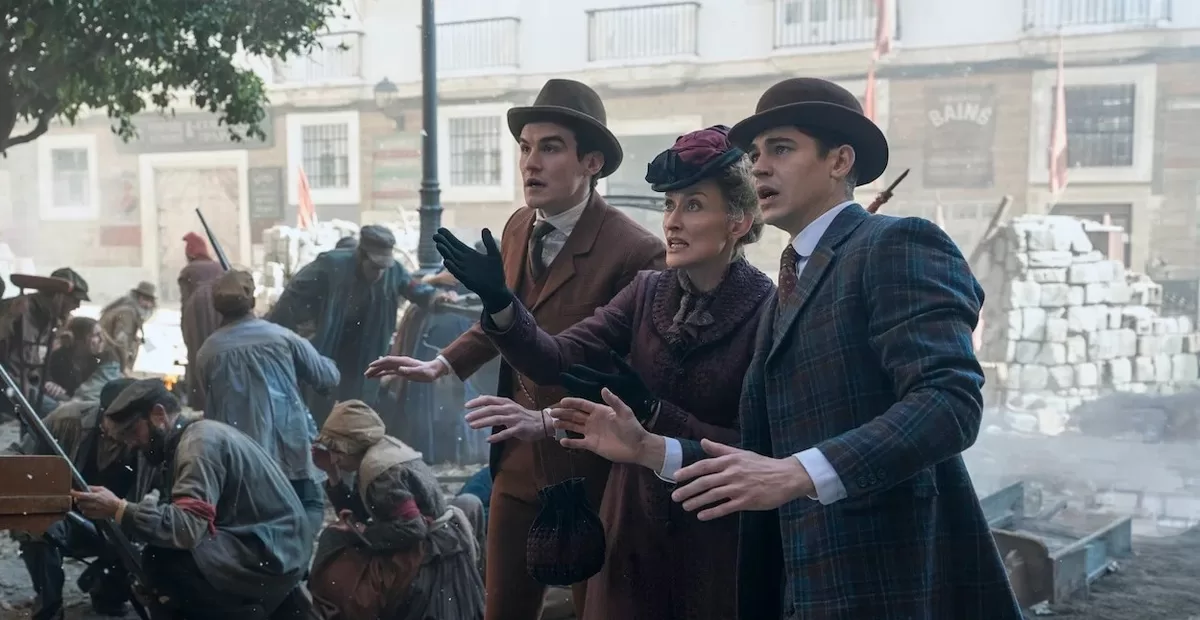
From the moment Young Sherlock begins, Ritchie's directorial fingerprints are undeniable. Fans of his previous work will immediately recognize the stylistic hallmarks: scenes featuring flippant young men in flat caps shouting "Oi" while hurtling through the air in slow motion; bare-knuckle brawls cheered on by "bulbous cockneys" with Irish folk music frenetically playing in the background; and sequences where the pacing suddenly accelerates for no apparent reason, juxtaposed with "effortful banter between bruisers in tweed trousers." These elements, alongside the presence of "blundering rozzers," create an unmistakable atmosphere. The series leans heavily into this established aesthetic, which some describe as "faintly steampunk" – a blend of period setting with a gritty, anachronistic edge that characterized his 2011 film, Sherlock Holmes: A Game of Shadows. If you're pondering whether his unique style remains fresh in the current television landscape, you might find our in-depth analysis on Guy Ritchie's Young Sherlock: Is His Signature Style Still Fresh? particularly illuminating.
However, what felt innovative and energetic in 2011 might strike some viewers in 2026 as somewhat repetitive. While Ritchie's visual panache undoubtedly gives the series a distinct flavour, its constant reliance on these tropes can, at times, feel like a retread rather than a reinvention. The female characters, for instance, while contributing to the plot, are often marginalized from the "fun," a criticism that has occasionally shadowed Ritchie's earlier projects. This isn't to say the style is without its merits; it provides a consistent, high-octane backdrop for the unfolding mysteries, ensuring that the show never suffers from a lack of visual dynamism.
Oxford's Enigmas: Plotting Sherlock's First Steps
The narrative whisks us away to the hallowed halls of Oxford, famously dubbed "arguably the greatest university in the world!" Here, we meet a 19-year-old Sherlock Holmes (portrayed by Hero Fiennes Tiffin) not as a budding genius, but as a "smirking young pickpocket." His sensible older brother, Mycroft (Max Irons), intervenes, forcing Sherlock to earn his keep as a porter within the university. Mycroft's warning – "I will be keeping an eye on you" – sets a fascinating dynamic, though Mycroft's vigilance proves insufficient to prevent his brother from stumbling into his inaugural case.
This first entanglement is a sprawling, "Tintinesque affair," indicating a global scale and a sense of boyish adventure. The plot swiftly escalates to include deadly weaponry, ancient manuscripts, international espionage, and "long-buried family secrets" that threaten to shake the very foundations of the establishment. Amidst this complex web, a mysterious princess (Zine Tseng) arrives at Oxford bearing a priceless fifth-century scroll, drawing Sherlock into a perilous investigation concerning attempts to eliminate "The Four Apostles" – an enigmatic group of academics previously involved in a clandestine government mission in rural China. The sheer number of interwoven threads and shadowy double agents contributes to a dense, at times overwhelming, plot structure that demands close attention.
Key Players in the Oxford Game:
- Sherlock Holmes (Hero Fiennes Tiffin): A resourceful pickpocket, forced into respectability, whose inherent curiosity quickly pulls him into a world of intrigue. His initial presentation is far from the cerebral, composed detective audiences know.
- Mycroft Holmes (Max Irons): The older, more responsible brother, attempting to guide Sherlock towards a productive path, yet inadvertently sparking his investigative instincts.
- James Moriarty (Dónal Finn): A "magnificently assured turn" introduces Moriarty not as a nemesis, but as Sherlock's "irascible new BFF." This unexpected alliance provides much of the show's early camaraderie and conflict, redefining their iconic relationship from the outset.
- The Princess (Zine Tseng): Her arrival with a crucial ancient artifact serves as a central catalyst for the overarching mystery, hinting at deeper international implications.
- Holmes' Grief-Stricken Mother (Natascha McElhone): Her presence suggests personal stakes and unresolved emotional baggage for the young detective, intertwining the family's past with the present dangers.
Character Interpretations and the "Three-Pipe Problem"
One of the most intriguing aspects of Young Sherlock is its approach to character. The series exists in a peculiar limbo: it's neither a strict adaptation of Andrew Lane's books nor a direct prequel to Ritchie's previous films. In fact, one could argue that with a simple change of names, the characters could belong to an entirely different, original story. They are intentionally "far removed from the point in their lives that is familiar to audiences," allowing for creative freedom but also posing a challenge for viewers expecting a recognizable path to the iconic figures.
Hero Fiennes Tiffin's portrayal of Sherlock Holmes is perhaps the most debated element. Described as a "three-pipe problem" – a classic Holmesian term for a particularly challenging puzzle – his presence is central to the show's identity. This "problem" could refer to a few things: perhaps his portrayal lacks the established gravitas or intellectual depth audiences associate with even a younger Holmes, or it challenges the viewer's preconceived notions so thoroughly that it requires significant mental adjustment. His smirking pickpocket persona, while distinct, may struggle to fully bridge the gap to the cerebral detective. However, Dónal Finn’s Moriarty, presented as a volatile yet compelling companion, is a standout. His "magnificently assured turn" as Holmes’s initial ally offers a fresh and engaging dynamic that proves to be one of the show's strongest assets.
The show attempts to imbue its characters with personal stakes, particularly through the inclusion of Holmes's grief-stricken mother and hints of deep-seated family secrets. However, the relentless pace and focus on action sometimes overshadow deeper character development, leaving some performances, like Tiffin’s, feeling somewhat underdeveloped or not quite hitting the mark of the character's legendary potential. It's a bold reinterpretation, but one that demands an open mind from even the most ardent Sherlockian.
The Verdict: A Convoluted Twist on a Classic
Ultimately, what kind of experience does Young Sherlock offer? It’s a series that firmly plants its flag in Guy Ritchie’s signature style, delivering a relentless barrage of action, snappy dialogue, and intricate plotting. The energy is undeniable, echoing the "comic-book romp" feel of A Game of Shadows. For those who appreciate Ritchie’s distinctive directorial vision, the series can be a "fun time," a high-octane adventure that doesn't take itself too seriously despite its complex narrative.
However, the show's deliberate detachment from established lore – neither a faithful book adaptation nor a true prequel to Ritchie's films – can be a double-edged sword. While it grants creative liberty, it might disorient viewers hoping for a clear origin story or recognizable character arcs. The convolution of the plot, packed with shadowy figures, international conspiracies, and an extraordinary number of "statement moustaches," can sometimes verge on the bewildering. If you're weighing the pros and cons of this unique offering, our article Young Sherlock Review: Convoluted Action or Engaging Origin? provides further perspective.
For viewers approaching Young Sherlock, it's essential to set expectations. Don't anticipate a direct, reverent adaptation of Conan Doyle or even Lane's works. Instead, embrace it as a standalone Guy Ritchie creation – a gritty, fast-paced period mystery that uses familiar names as a launchpad for a new, action-heavy narrative. Its strengths lie in its visual flair, its engaging supporting performances (particularly Dónal Finn's Moriarty), and its sheer audacity in reinventing a beloved icon. Its weaknesses, however, may be found in its occasionally overwhelming plot and a central performance that struggles to fully embody the legendary character in his nascent stages. It's an adventurous ride, but one that requires a certain tolerance for convolution and a love for Ritchie's particular brand of cinematic chaos.
In conclusion, Young Sherlock is a bold, energetic, and undeniably Guy Ritchie production. It offers a fresh, albeit unconventional, look at the formative years of the world's greatest detective, filtering his origin through a lens of stylized action and intricate mystery. While it may not satisfy purists or those seeking a traditional prequel, it undoubtedly carves out its own unique space in the ever-expanding Sherlock Holmes universe, proving to be a distinctive, if at times perplexing, entry.